Article: Buying Art Online – My Thoughts, Tips & What I’ve Learned Along the Way
Buying Art Online – My Thoughts, Tips & What I’ve Learned Along the Way
It's true – buying art online can feel a bit daunting. You’re choosing something that’s meant to add beauty, interest and a sense of connection to your space, and reflect a bit of you. But how do you get a good sense of an artwork when you’re staring at it on a screen, possibly squinting at your phone between errands or late at night under a doona? And how can you trust it is going to look the same as what you see online?
I get it. I’ve been on both sides of the process as a buyer looking to bring something beautiful into my home, and as an artist and designer sharing my own work online. Over time, I’ve learned a few things about what makes buying art online easier, what to look for, what to ignore, and how to make decisions you won’t regret. I thought I’d put it all in one place, in case it helps you too.
Start with What You Love (Not What You Think You Should Love)
As an artist, I’m often asked how I choose art for my own home, and my answer is always the same: I go with what I feel connected to, not what I think I’m 'supposed' to choose. But honestly, the best pieces I’ve ever bought have always been the ones that made me feel something.
Forget the rules for a moment. If something makes you smile, calms your nervous system, stirs a memory, or just pulls you in… start there. Those will be pieces you will likely enjoy looking at forever.

Originals vs. Prints – What's the Deal?
This is a big one. Original art is, of course, one-of-a-kind. It might be a painting with brushstrokes you can see and texture you can feel. But that also means it often comes with a higher price tag. Worth it? Absolutely - if it’s in your budget and the piece speaks to you.
Prints, on the other hand, are often more affordable and can still be beautifully made. In fact, with the right materials and print methods, a print can look incredibly close to the original. I sell high-quality prints because I love the idea of making art more accessible without sacrificing the experience.
The key with prints is to check what kind of paper or material they’re printed on, what ink is used, and whether it’s a reproduction of a real piece or a digitally created artwork (both are valid, it just depends on what you’re after).
How to Know You’re Getting Quality
Alright, so what should you actually look for when buying art or prints online?
- Materials: For originals - is it on canvas, paper, or board? For prints, look for archival paper, a matte finish, or something with a soft texture.
- Inks and printing method: Ideally, look for pigment inks and giclée printing if you’re after long-lasting quality. Dye-based prints might fade faster, especially in sunlight.
- Framing options: Does the seller offer framing? If not, will the size be easy to frame? Is it printed with a border?
- Details & close-ups: Don’t be afraid to zoom in. A reputable artist or shop will show you close-ups so you can see the texture and finish. If they don’t, feel free to ask!
Why Print Quality Really Matters
I have bought some lower-quality prints online in my past, and they rarely look as good as they do online. Often, the colours were off, the paper was shiny and noticeably flimsy. They had more of a poster feel than an art print, and they tended to fade and buckle over time. And that's okay, as long as you know what to expect.
So I’m not saying never to buy cheaper poster-style prints - just be aware of what you’re purchasing and how long you’d like it to last. In comparison to a top-quality print, the difference is noticeable.
What If You're Unsure?
This is one of the best things about buying directly from artists or small studios is that you can reach out and ask questions. I love it when people message me to ask about the feel of the paper, or what the colours look like in real life. Sometimes I’ll even photograph a print beside other things (timber, walls, textiles) to help someone imagine it in their space.
So don’t be shy. Ask how a print compares to the original, or whether it will suit your warm-toned living room. Good sellers won’t mind at all.

Understanding Colour Online (This Can Be Tricky!)
Screens can be deceptive. I use a colour-calibrated screen when preparing prints, and my print files originate from actual paintings that I get scanned on a specialised high-quality flatbed scanner – but even so, depending on your phone settings or computer brightness, things can look different online. You can never truly rely on screens for accurate colour. If you can view a range of images of an artwork, including close-ups, it is more likely you'll get a pretty good overall, accurate idea of what you will receive.
A few tips:
- Read the description: I usually describe the dominant colours and the overall tone (warm, cool, earthy, bold, etc.)
- Ask for more photos: If you’re unsure, message and ask to see how it looks in a styled room or under natural light.
- Trust your gut: If the colours seem right and you keep coming back to it, that’s often a good sign.
See It on Your Wall Before You Buy
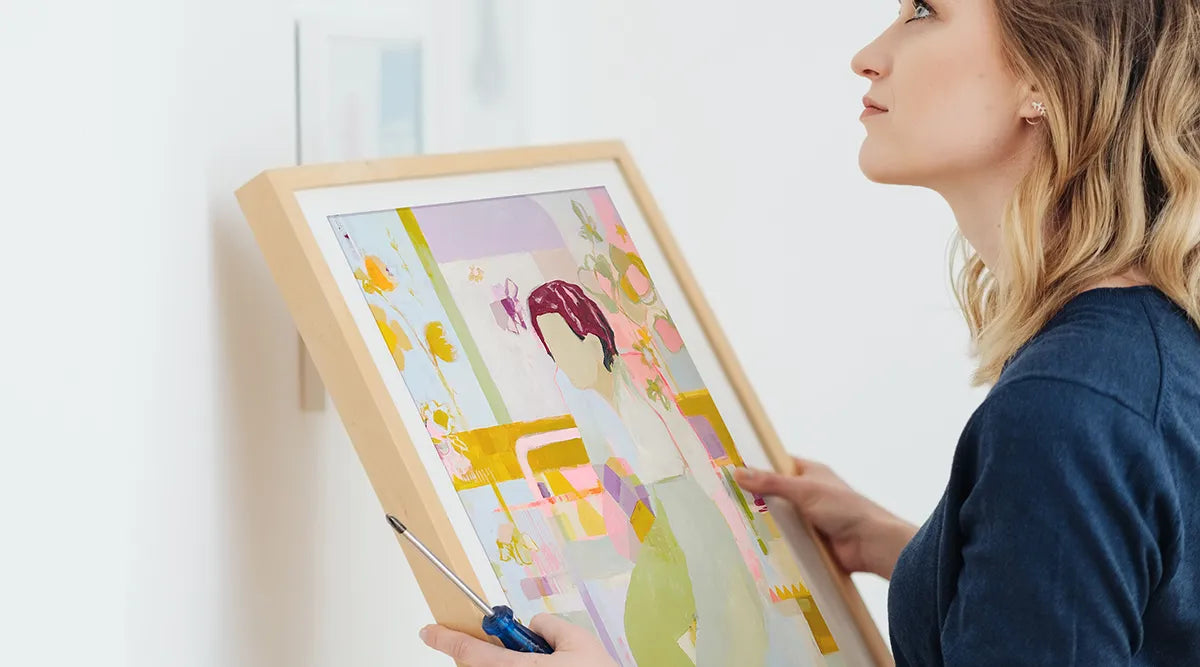
There are some clever tools out there now (including AR apps or mockup previews) that let you visualise the artwork in your own space. But even without tech, here’s what I often suggest:
- Tape the dimensions out on your wall using masking tape (just don't leave it there too long or it might take off some paint - I learnt from experience!)
- Step back and look at how it balances with furniture and other decor
- Print a photo of the art and Blu-tack it up (or use Canva to mock it up in a photo of your room)
This can help more than you’d think. You’ll quickly get a feel for whether something is too small, too bold, or just right.
Side note: We can also do this for you! Just shoot us an email and we’ll let you know what we need from you to create a mockup of one of our prints on your wall.
When Styling Around Art Needs a Tweak
A friend of mine bought a print she really loved for the colours, the style, and the story it told. But when it arrived, it was bigger than she’d imagined, and it made her sideboard feel cluttered.
We talked through a few styling ideas, and she ended up removing a couple of accessories, shifting the lamp, and giving the artwork more breathing space. Now it looks great and is one of her favourite spots in the house.
Sometimes it’s not the art that’s wrong – it’s what’s around it.
The styling can also play a part, so if there is a piece you really love but you are unsure it works with the rest of your surroundings, don't write it off altogether. There might be ways to make it work.
It’s also a good reminder to tape out the size before you buy! But one of the great things about prints is that they usually come in a range of sizes, so you can choose what best suits your space.

Should You Buy Art as an Investment?
This depends on your priorities. Personally, I think the best investment is in a piece that lifts your mood, transforms a room, or becomes part of your daily rituals (like seeing it every morning while you sip coffee).
Sure, original art can increase in value over time, especially if the artist becomes more well-known. But for most of us, it’s about how a piece makes us feel right now, not a future resale price.
If you love it and can afford it, that’s reason enough.
A Few Final Thoughts
- If something sells out before you get to it, reach out. The artist may be working on similar original pieces or planning another print run.
- Don't underestimate the impact of framing. Different frame types and colours can completely change how a piece looks in your space. A well-framed print can feel just as luxurious as an original.
- Trust your instincts. Good art often stirs something in us, even if we can’t explain it.
Buying art online isn’t a bad idea, it can be exciting, easy, and deeply personal. It’s about choosing pieces that speak to you, asking questions when you need to, and trusting that a beautiful, well-made print or painting can change how your whole space feels.
And if you ever want help choosing, styling, or just want to chat about colour (because honestly, I could talk about colour combos all day) – you know where to find me.
Here’s to more homes filled with art that matters.
— Kylie