How to Choose the Right Size Art Print for Your Space
There’s something oddly difficult about a big empty wall.
You want your home to feel a bit more styled. A bit more finished. Maybe you finally have the sofa you wanted (or maybe that’s still on your list), but something is missing. The walls just aren’t quite matching the rest of the space. You might already have a couple of artworks hanging up, but somehow it still doesn’t look quite like the rooms you see on The Block or on Instagram. Maybe not even close (🙋🏽♀️).
So now you’re standing there looking at a blank wall, thinking:
Should I go big?
Should I do two side-by-side?
Vertical? Horizontal?
Is this wall too small for art?
Should I just buy another plant?
An underwhelming room can be pretty overwhelming.
Let me try to uncomplicate it.
Stick with me and I’ll walk you through a few easy ways to choose the right art print size for your home, without overthinking it. We’ll start with the wall, talk about scale and spacing, and make sure you end up with art that really feels ‘right’ for your space.
And don’t worry — you’re not alone. I also have many a blank wall at my place (I’m an artist, not a stylist), so I’m figuring this out right alongside you.
We can learn together.
1. Start With the Wall, Not the Artwork
Before falling in love with a print (and I fully encourage that but just a little later), start by looking at the space you want to fill.
Ask yourself:
Is the wall wide, tall or square? Is there furniture underneath it? Do you like lots of breathing room around your art, or do you prefer a more filled-in look? Are you after one statement piece or a small cluster?
A few rules of thumb to consider:
Above Furniture
When artwork is hung above furniture, a good guide is to think in width.
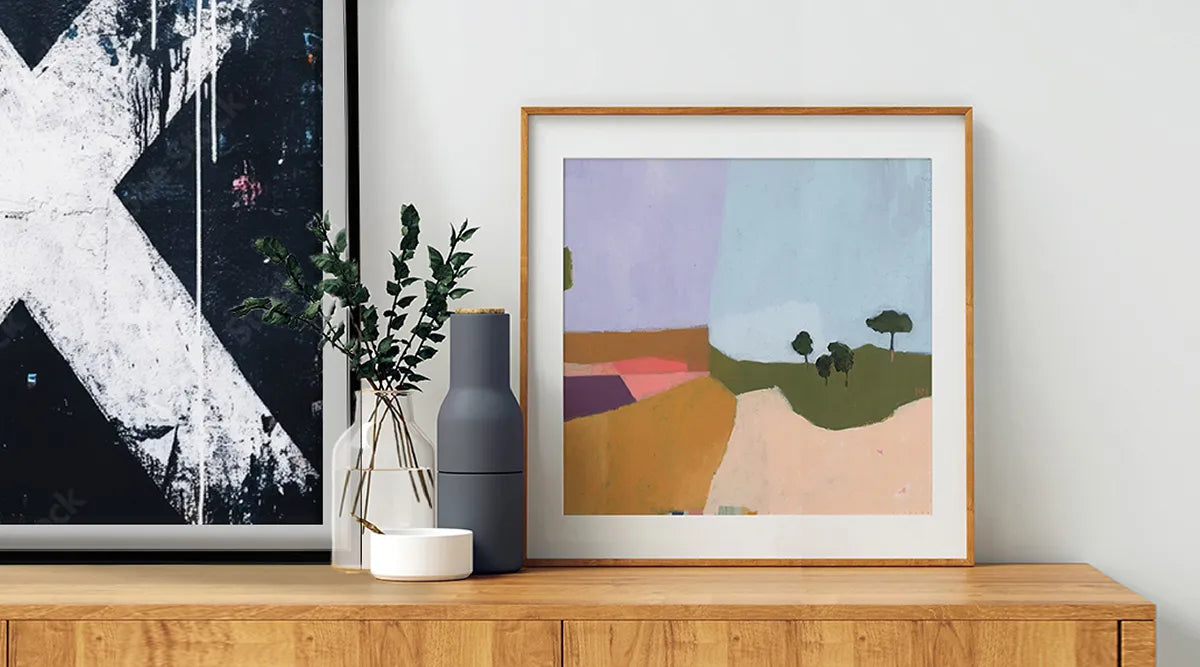
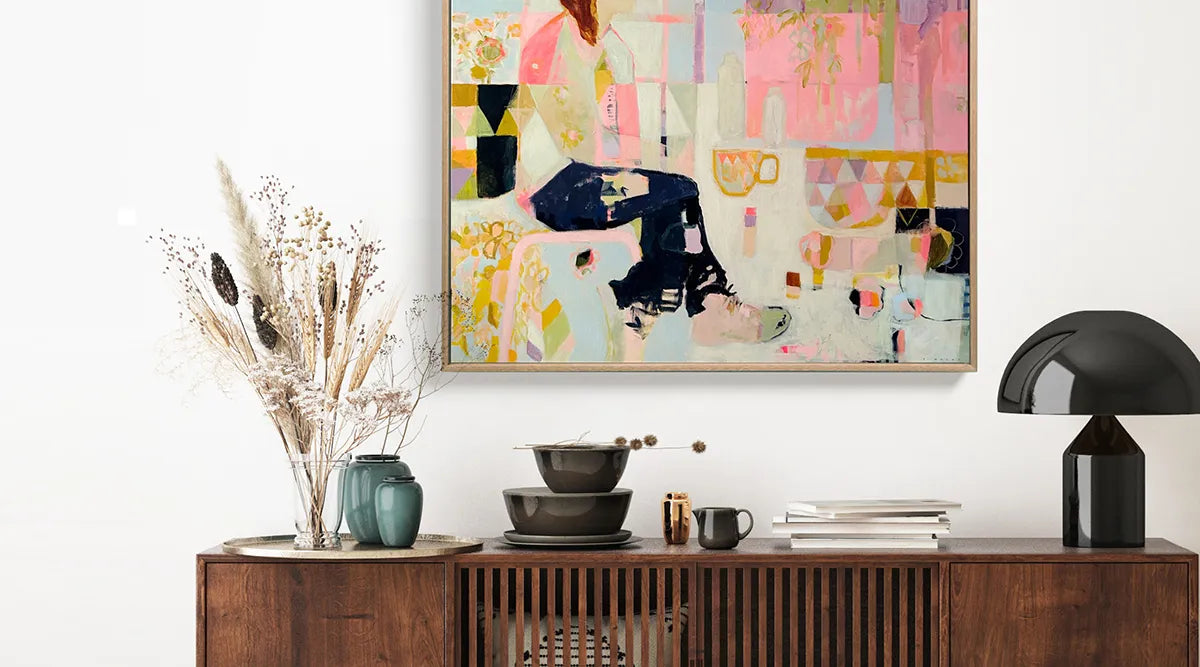
In most cases, artwork looks best when it fills about 50–75% of the width of the furniture below it. This keeps everything feeling visually connected without overpowering the space.
As a rough guide:
- Above a 3-seater sofa → aim for an 80–120cm wide artwork
- Above a sideboard → 60–100cm wide
- Above a bed headboard → 70–140cm, depending on the room
That usually feels balanced — not too small, not too heavy.
Full-Height Walls (No Furniture)
If your wall runs floor to ceiling with no furniture in front of it — like in a hallway, stairwell or entry — the 50–75% rule is too much.
On open walls, it’s more helpful to think in height, not width.
A better guide here is:
Aim for artwork that fills about 40–60% of the wall height.
This helps the artwork feel intentional, without dominating the space.
A simple way to picture it:
- If your wall is around 240cm high
- A great artwork height is roughly 90–140cm (including the frame)
Anything much taller can start to feel heavy, especially in narrower areas.
A Quick Note on Balance
If following these guides gives you an artwork size that feels far too big for the room, trust that instinct.
Ceiling height, furniture styling, lighting, and what’s already on the wall all play a part. The goal isn’t to fill space — it’s to create balance.
How High Should Art Sit on an Open Wall? (note; i think the section about how high the art should sit may be more suited to hanging art blog? rather than this one about choosing the right size?? maybe not)
The same gallery-height rule still applies:
👉 Centre of artwork = 145–155cm from the floor
That keeps it comfortable to look at and visually connected to the room.
If the piece is very tall, let the bottom float higher rather than pushing the top up to the ceiling. Art needs breathing space.
How Close to Corners and Edges?
This makes a big difference to how “designed” a room feels.
A good rule of thumb:
Keep artwork at least 25–40cm in from corners Keep artwork at least 25–40cm from door frames and window frames This stops the art from feeling cramped or accidental.
Think of it like margins on a page — the wall needs space to frame the artwork.
What If There’s a Door on the Wall?
Great question.
If a door swings open against the wall, that section of wall is not usable wall space.
So when measuring:
👉 Only measure the wall that remains visible when the door is fully open.
That’s your “available wall space”.
The artwork should sit comfortably within that remaining area, not hidden behind a door half the time.
But it’s not all rule of thumb
Think of these as guidelines, not instructions. They’re a starting point, your room always gets the final say, and reading your particular space is also important.
2. How to Read the Space (Not Just Measure It)
It’s tempting to grab a tape measure and start doing the maths, but choosing the right art size is just as much about what’s already happening in the space.
Here are a few things to look at before you lock anything in.
Look at the Visual Width, Not Just the Furniture Width
If you have a long cabinet — like a TV unit that’s 2.5m wide — following the 75% rule exactly can lead you to artwork that feels far too big.
Instead of matching the full width of the furniture, look at the visual centre of the wall.
Ask yourself:
- Where does your eye naturally land?
- Is the cabinet visually broken up by a TV, lamps, or plants?
- Is there a “clear zone” above the furniture rather than the full width?
Often, the best artwork size sits within the furniture width, not across all of it.
Consider What’s Sitting on the Cabinet
Anything on top of the furniture counts as part of the composition.
For example:
- a TV
- table lamps
- vases
- plants
These elements already take up visual space, so the artwork doesn’t need to do all the work.
If the cabinet styling is tall or busy:
- go narrower with the artwork
- let the artwork sit between objects
- or centre it to balance what’s already there
Sometimes a single strong piece works better than something that spans the entire width.
Ceiling Height Changes Everything
Lower ceilings call for a lighter touch.
If your ceiling height is on the lower side:
- very wide or very tall artwork can feel heavy
- leaving more breathing room above the art helps the room feel taller
- a medium-sized artwork can feel calmer and more considered than a huge one
In these cases, it’s completely fine for the artwork to be closer to 50–60% of the furniture width — or even less.
Think in Shapes, Not Just Sizes
Instead of thinking “I need a 2m wide artwork”, try thinking in shapes:
- one medium horizontal piece
- two smaller pieces side by side
- a vertical piece that draws the eye upward
- a quieter piece that lets the styling do some of the talking
This shift alone helps people stop feeling boxed in by numbers.
Step Back and Trust the Balance
Once you’ve mocked it up (with tape or paper), stand back and ask:
- Does this feel balanced?
- Does it fight the furniture or work with it?
- Does it give the wall some presence without dominating the room?
If it feels calm and intentional, you’re probably on the right track — even if it doesn’t perfectly match a rule.
3. Choosing the Perfect Print Size (By Room)
Living Room — Go Bigger Than You Think
Living rooms usually have the most wall space, and they can handle a bold statement.
Most people choose art that’s far too small — which makes the room feel a bit unfinished.
Great sizes for living rooms:
60 × 80cm 75 × 100cm 100 × 140cm (statement size)
Bedroom — Calm, Balanced, Restful
Bedrooms suit softer tones and calmer compositions, but the scale still matters.
Great sizes for bedrooms:
40 × 50cm (perfect for bedside pairings) 60 × 80cm 75 × 100cm (above the bed)
Entryway — First Impression Art
Entryways are the perfect place for something vertical or a stacked pair.
Great sizes:
50 × 70cm 60 × 80cm 75 × 100cm (portrait)
Office or Studio — Mood Setting
Your workspace should feel inspiring, not distracting.
Great sizes:
40 × 50cm 50 × 70cm 60 × 80cm
4. Think About Pairs and Groupings
If one artwork feels too small for your wall, you don’t always need to jump straight to a huge piece.
Two medium prints side-by-side can look beautiful and intentional.
Some easy combinations:
Two 50 × 70cm prints Two 60 × 80cm prints A vertical pair stacked above each other This works especially well above sideboards, desks, or along long hallways.
If you love the idea of layering multiple pieces, you might enjoy creating a gallery wall, but that’s a whole topic on its own (I’ll be writing a full guide on that soon).
4. Test It Before You Commit (The Easy Way)
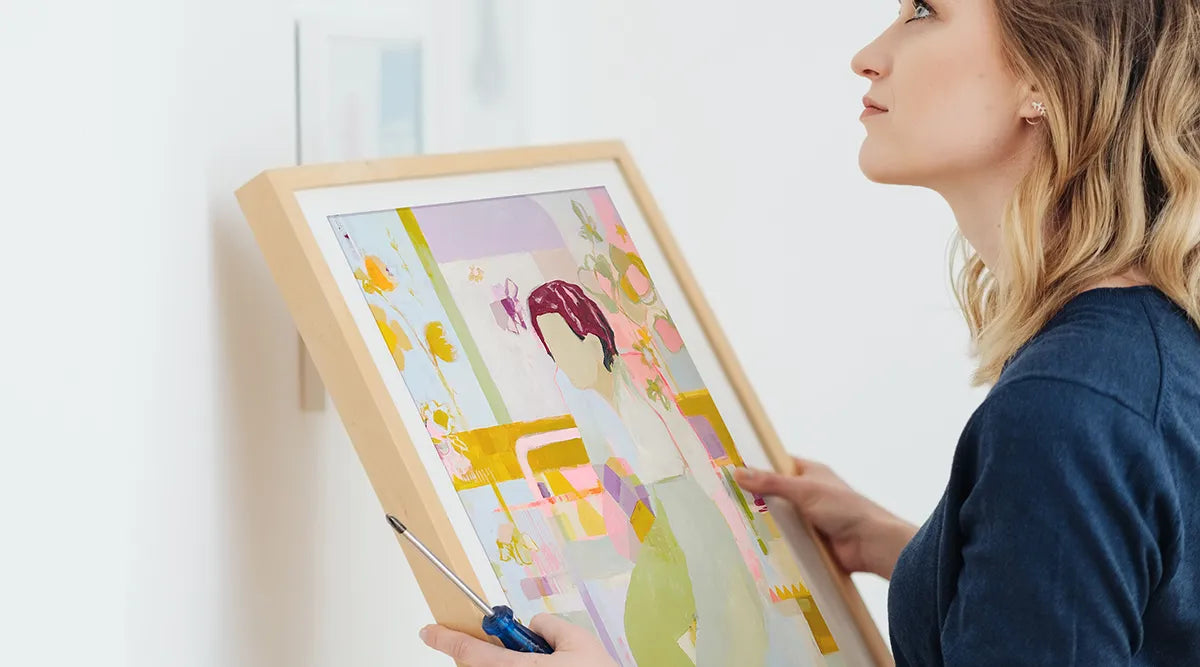
Before you buy, mock it up.
Seriously — this saves so much second-guessing.
Method 1 — Painter’s Tape
Tape the outline of the artwork on your wall.
Stand back.
Adjust.
Have a small existential crisis.
Adjust again.
Method 2 — The A4 Paper Trick
A4 = roughly 21 × 30cm
Use multiple sheets to build the size you’re considering.
It’s surprisingly effective.
Suggested image:
Photo of a taped-out frame on a wall.
A Few Common Questions
Is big wall art better?
Often, yes. Larger pieces anchor a room and make it feel finished.
How high should I hang art?
Around 145–155cm from the floor to the centre of the artwork (gallery height).
Should art match my furniture colours?
Not necessarily. Great art can contrast, complement, or gently disrupt a room in a beautiful way.
Final Thoughts; Choose What Feels Right
There are guidelines, but in the end… this is your home.
Choose the size that makes the space feel calm, warm, and more like you.
Art is emotional before it is technical.
And if you ever get stuck, send me a photo of your wall — I genuinely love helping people find the right fit.
Coming Soon
If you’re keen to go further, I’ll also be sharing:
How to create a gallery wall (without it looking messy) Easy hanging methods and spacing guides Styling tips for shelves, consoles and ledges You don’t need a perfectly styled home, just a few thoughtful pieces in the right places. I’m writing more of these practical art guides this year, so if you’d like them landing in your inbox, make sure you’re on my mailing list.